
Before a renovation changes a room, it changes the questions you need to ask about its materials. A finish that has been left alone may now be scraped, drilled or removed. Finding out what that work could disturb belongs in the planning stage, before demolition begins.
Define the work before assessing the material
Describe the proposed work to a qualified hazardous-material specialist and provide any existing assessment records. Check whether those records cover the exact materials and areas involved. An assessment elsewhere in a building does not automatically settle the status of a finish, backing, adhesive or concealed layer in the new work area.
Materials warranting assessment for possible asbestos content have been identified in our residential inspections. That recommendation is a reason to investigate, not laboratory confirmation. Building age, a photograph or a material’s appearance cannot establish asbestos content on their own. An ordinary visual inspection also does not expose every concealed layer.
Keep suspect materials undisturbed while obtaining advice. Québec guidance recommends avoiding disturbance and seeking appropriate professional assessment. Scraping, drilling, sanding or collecting a sample during a property viewing can undermine the precautions the investigation is meant to establish.
Vermiculite requires the same care with conclusions
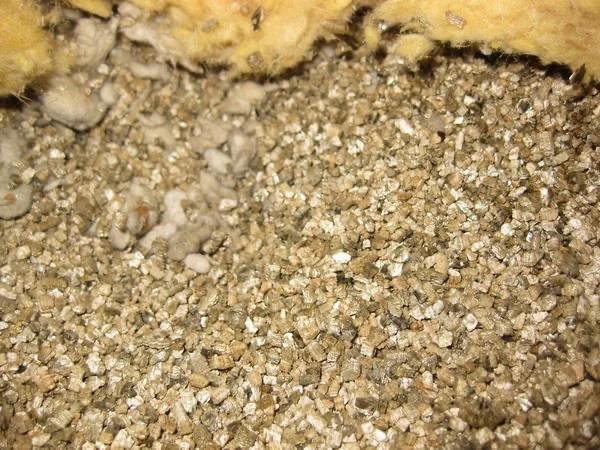
Some vermiculite insulation may contain asbestos. This is a general material precaution; it does not mean every vermiculite product contains asbestos. Nor does identifying something that looks like vermiculite confirm its composition.
If suspect insulation may be disturbed, consult an appropriately qualified professional before entering, moving or working through it. The question should be tied to the actual material and planned work, rather than answered from a comparison photograph. This guide does not claim a confirmed vermiculite occurrence or an asbestos test result.
Make the assessment useful for the renovation
Ask the specialist to explain which material was assessed, the method used, the scope and the limitations. Laboratory information must be interpreted in relation to the sampled material and assessment plan. A result should not be extended to materials or areas it does not address.
Condition, composition and work planning are related but separate. An intact material can still need consideration before disturbance; a suspicious appearance does not establish what it contains. The appropriate response depends on identification, condition, accessibility and the work proposed.
Before relying on a renovation budget, establish what specialist input is needed and how it could affect the work. Leave removal obligations and abatement methods to the appropriate project-specific assessment. A visual residential inspection can flag the need for that assessment, but it cannot substitute for it. Keeping the question open until it is properly answered gives the renovation a firmer basis than either reassurance or alarm drawn from appearance alone.