
Why might a mark around a window return after cleaning? The answer depends on where the moisture is coming from: outside the building, indoor air meeting a cold surface, or another source. Treating the appearance alone can leave that question unanswered.
Watch the moisture pattern
Note when condensation appears, which surfaces are affected and whether conditions change with weather or household activities. A humidity reading can add context, but a single measurement cannot describe a home’s moisture history. Repair records and observations over time may help a professional decide what to examine.
Condensation can occur when moist air meets a sufficiently cold surface. Rain entry, plumbing leakage and other sources may also need investigation. Suspected high indoor humidity is an explanation to assess, not proof that the envelope is sound. An intermittent leak may leave no visible trace of active water entry during a visit.
Visible growth needs more than a label
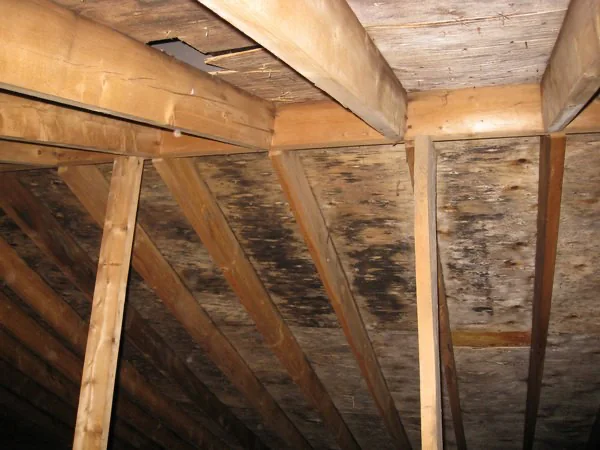
In our inspection work, growth described as mould has been observed around windows and on interior surfaces, alongside moisture concerns in attics and basements. Specialist evaluation has been recommended where the conditions warranted it. Appearance alone cannot identify a species, establish the hidden extent or diagnose an occupant’s health effects.
Cleaning away a mark does not demonstrate that the moisture source has been controlled or that concealed materials are dry. The appropriate assessment depends on the area affected, materials and access. Health Canada’s guidance emphasizes addressing moisture and mould; this is not a reason to disturb affected or unknown materials without appropriate advice.
A recently cleaned surface may therefore still need investigation if moisture persists. Equally, similar-looking marks need not share a cause. A useful explanation connects the visible condition with evidence about the moisture source and identifies what remains uncertain.
Decide what testing would answer
An air sample is not the automatic next step for every visible concern. Health Canada advises that routine mould air testing is generally unnecessary and cannot, by itself, determine an occupant’s health risk. When testing is proposed, ask which uncertainty it addresses, how the result will be interpreted and what physical investigation will still be required.
An infrared image has a different role again: it shows temperature patterns, not a laboratory result. Neither an inspection photograph nor a thermal image provides a personal health diagnosis. Questions about symptoms or health belong with a healthcare professional.
Address the source and the extent
Arrange an appropriate assessment when moisture or suspected growth persists, particularly if the source, extent or safe access is unclear. Discuss ventilation operation, drainage and relevant building details without assigning the cause to occupants from a brief visit.
A visual inspection cannot reveal every concealed pathway or conditions throughout the seasons. Bring the pattern you have recorded to the follow-up conversation and ask how the proposed work will address it. Resolving the moisture question is more useful than relying on a clean-looking surface as evidence that the problem has ended.