
Fresh boards can make a deck look ready for summer while leaving its connections and supports out of view. Before treating a surface repair as a safety improvement, consider how the structure carries loads and how people reach and use it. Appearance is only one part of that assessment.
If safety is already in question
Avoid using a deck or balcony that appears unstable or has been identified as unsafe, and obtain prompt qualified advice. Do not gather people on it, bounce on it or remove components to see whether it holds. Arrange appropriate access controls without exposing yourself or others to the hazard.
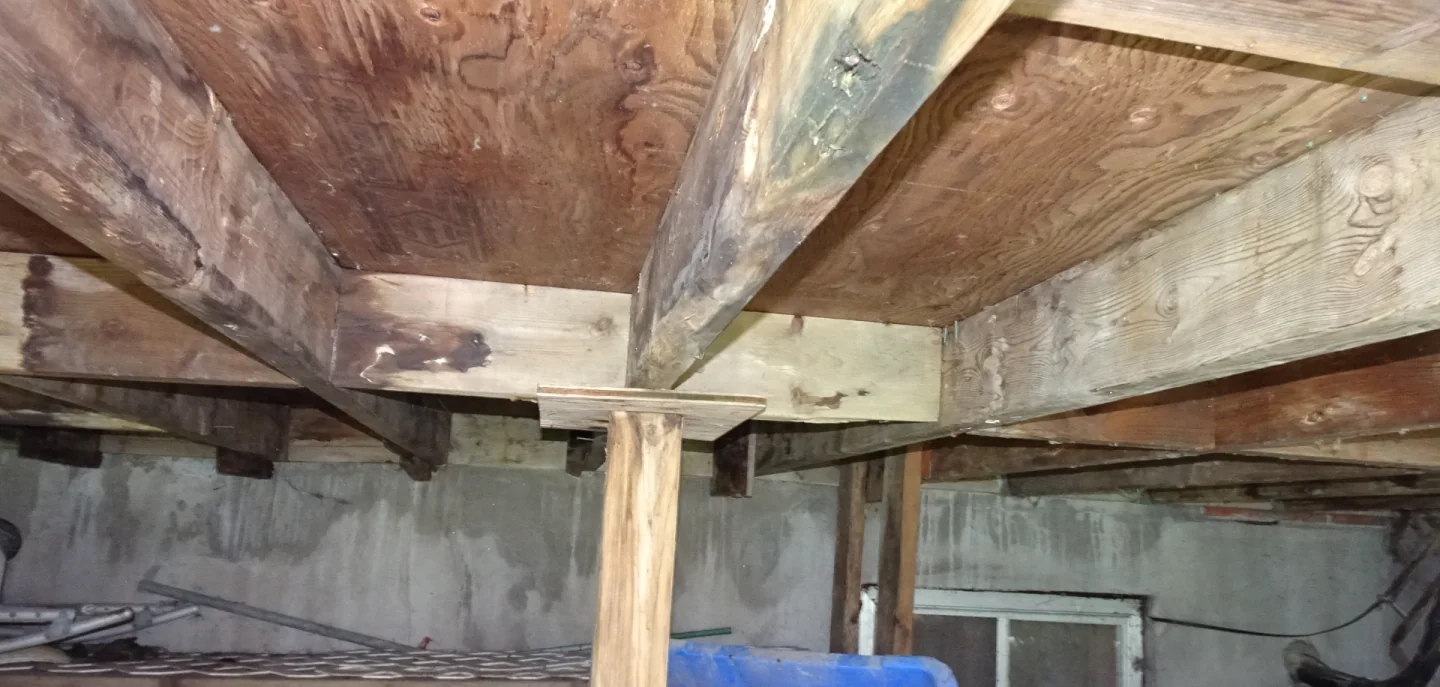
Rot in deck flooring, unsafe exterior deck conditions and a ledger attached to a brick wall have required attention in our inspection work. They raise different assessment questions. None allows capacity to be calculated from appearance or establishes a shared structural cause.
Follow the support and connection details
A deck transfers loads through connected components to its supports. Visible deterioration can raise questions about neighbouring concealed material, framing and fasteners. Replacing a damaged board addresses that board; it does not establish the condition of everything beneath it. A qualified contractor or structural professional should determine the assessment and repair scope.
At a ledger, the wall construction and the handling of loads and water matter. Visible attachment to brick does not reveal every concealed anchorage. A bracket or fastener pattern copied from another installation may not suit this one. The actual wall, support arrangement and applicable requirements need to be understood before choosing a repair detail.
Finishes, height and unsafe conditions can restrict inspection access. Photographs cannot verify footing depth, concealed anchorage or the remaining strength of deteriorated wood. Those unknowns should be addressed before a cosmetic repair is accepted as safety clearance.
Include the route onto the deck
An assessment should also consider accessible stairs, edges and relevant protective features within its scope. Visible instability, deterioration or missing protection warrants attention. A deck’s walking surface is not a substitute for examining how someone gets onto it or is protected at its edges.
Guard dimensions, loading criteria and other requirements depend on the installation and applicable rules. A general homeowner article cannot supply a complete code checklist or a universal repair design. Have the responsible professional establish what applies to the structure being assessed.
Agree on how the repair will be checked
Request a description of the affected components, concealed areas needing investigation and intended repair design. Establish who is responsible for any structural assessment and how the finished work will be verified.
Keep water management in the discussion as well. A repaired support or connection should not be left with an unresolved wetting concern. Before putting the structure back into use, seek the appropriate confirmation about the work and any remaining restrictions. That is a more meaningful basis for confidence than the appearance of new surface materials.