
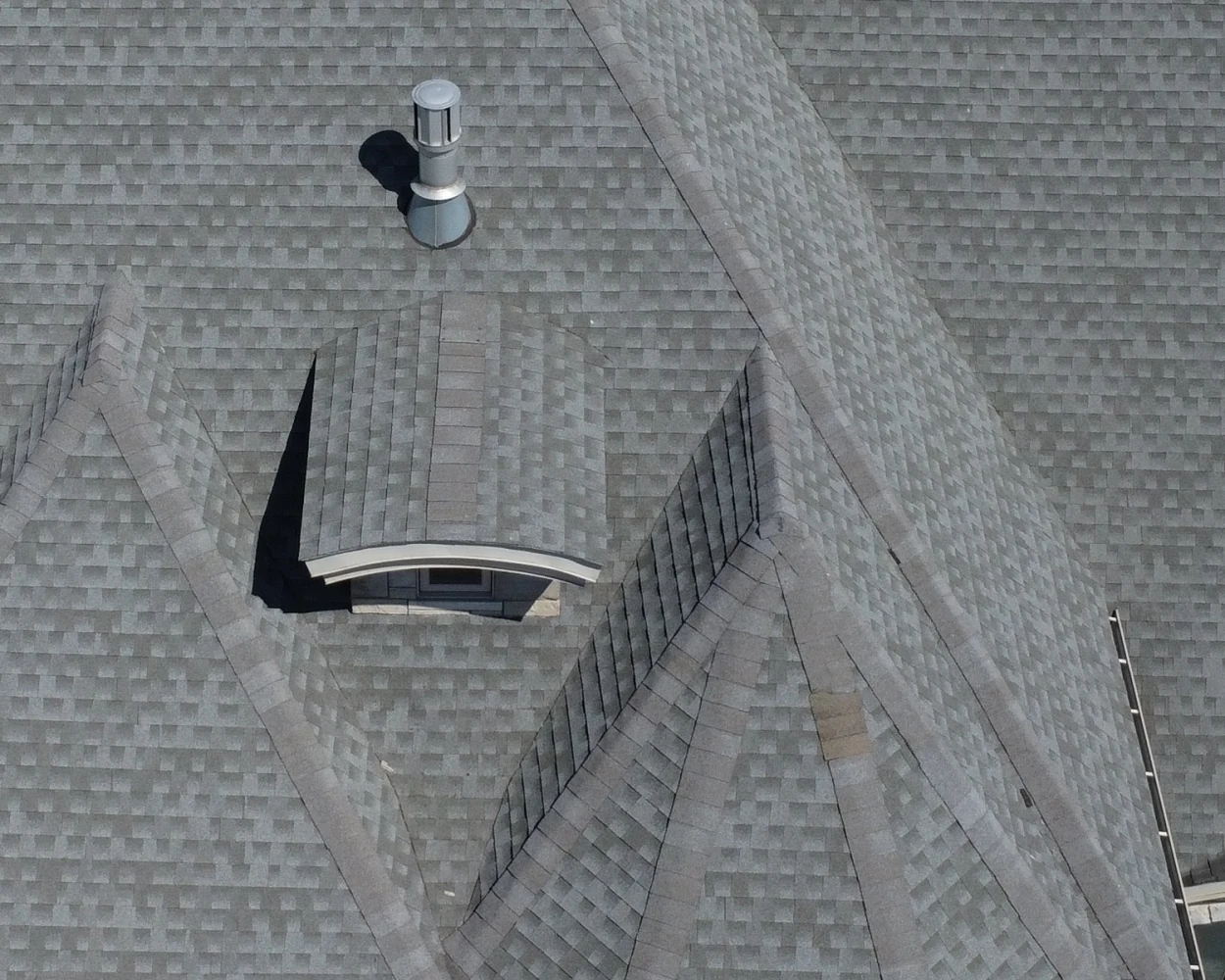
When looking at a roof, it is tempting to ask only how many years it has left. The more useful question may be where water could get past it. Worn covering, a loose flashing and a debris-filled gutter need different responses, even when they are visible from the same vantage point.
Coverings age; details need attention too
Ageing roll roofing and missing or damaged shingles are among the conditions we have encountered. Visible wear can identify areas needing attention, but it cannot reveal every attachment or layer underneath. Localized damage may matter even when much of the covering looks intact.
Ask about the covering type, installation records and repair history. An installation year gives context; it is not a remaining-life guarantee. The condition of the actual assembly and what can be accessed are more useful starting points for a roofing assessment.
Where the roof meets something else
Flashings manage junctions with walls, pipes and other materials. Loose details, questionable pipe-flashing installation and a missing kickout flashing have all warranted follow-up in our inspections. Debris in gutters has also required attention to drainage. Each concern needs to be assessed on its own merits rather than assigned a shared cause.
The flashing arrangement must work with the covering and the relevant product instructions. Open seams or questionable overlaps deserve a close look from a qualified roofing professional. A surface photograph may show the concern while leaving the membrane, substrate and fastenings hidden.
Water passing a vulnerable junction could wet concealed materials or interior finishes. That possibility is a reason to investigate, not proof that hidden damage is already present. The roofer should explain whether additional access is needed to determine the extent and whether a localized repair is suitable.
What an attic stain can tell you
Water staining on roof sheathing adds another clue. We have observed it during inspections, but a stain does not date the wetting or establish whether the source is still active. It may relate to an older event or an intermittent problem; condensation may also need consideration.
Available repair history and observations during relevant weather can help connect the clues. Ask the professional to explain how the proposed work addresses the suspected route of water, rather than assuming that the closest visible defect caused the stain.
Make drainage part of the maintenance plan
Arrange debris removal and roof work through someone equipped for safe access. A homeowner checklist is no reason to climb onto a roof or lean into an unsafe attic. The contractor should identify the affected detail, describe the work and record areas that could not be assessed.
Access, weather and roof geometry limit what an inspection can establish. Concealed workmanship remains uncertain where it cannot be examined, and no inspection promises performance in every storm. A useful maintenance plan therefore covers drainage and junctions as well as the covering, with repair details chosen for the actual products and assembly.