
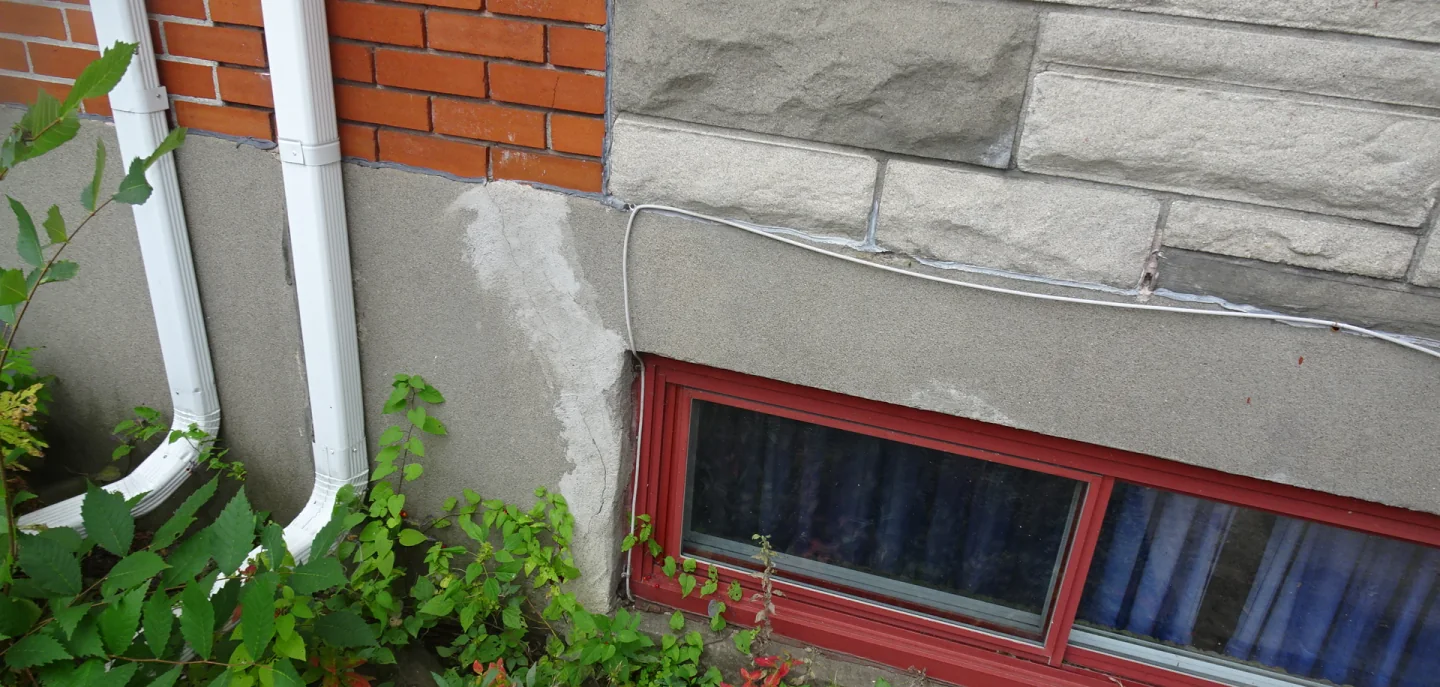
The crack is easy to see. Deciding what it means is harder. Before a homebuyer starts pricing a repair, it helps to separate three questions: what material has cracked, whether there are signs of movement, and whether water is getting through. A photograph or a width measurement cannot answer all three.
Look past the surface finish
Parging can hide the foundation beneath it. A visible line may be confined to that finish, continue into the underlying wall, or leave the distinction uncertain because the wall is covered. That uncertainty has mattered in our foundation inspections. It changes what can reasonably be concluded and what access a specialist may need.
Record the location, direction and any apparent displacement, along with signs of water entry. Photographs taken from a consistent position can help a professional compare later observations. Leave finishes and soil in place during a viewing; removing them to improve visibility can create another problem.
Horizontal cracking has also prompted concern about possible movement in our inspection work. The concern calls for assessment, not an automatic diagnosis. Shrinkage, movement and deterioration are among the explanations a specialist may consider. A narrow crack is not necessarily harmless, while a wider opening alone does not establish an emergency or dictate a repair.
A dry crack still deserves context
Water entry and structural significance are separate questions. A crack can provide a water path without demonstrating a loss of structural capacity. Equally, a wall that looks dry has not thereby been shown to be structurally adequate. Evidence of change, displacement or repeated leakage helps determine what needs investigation.
Grading and sump discharge arrangements are worth bringing into that conversation. We have recommended improvements to both, but those findings do not prove that drainage caused a particular crack. Trace where roof runoff, surface water and discharge water go, and ask how they relate to the concern. An extension or sealing treatment should not be offered as an answer to every basement problem.
Before accepting a repair proposal
A qualified foundation specialist or structural engineer should evaluate concerns within their scope. Provide available repair records and dated observations. Ask what the proposed repair is intended to address, which explanation supports it, and whether further access or monitoring is needed. A repair quotation does not necessarily assess structural significance.
Finishes, storage and soil can hide foundation surfaces. A visual inspection cannot establish soil conditions, hidden reinforcement, the complete footing arrangement or long-term movement. Those gaps matter when deciding whether an allowance in a purchase budget is realistic.
For a buyer, the useful outcome is a clear account of the concern and the recommended investigation before committing to a repair assumption. There is no universal crack-width threshold that replaces professional judgement, and a crack repair cannot guarantee protection from every future source of basement water.