
A lamp lighting up tells you that an outlet supplies power. It tells you much less about the protective device, connections or concealed circuit. For a homebuyer, the important distinction is between something that operates and something that has been adequately assessed.
When the test button does not do its job
A GFCI receptacle is intended to provide a particular form of electrical protection. We have encountered a receptacle that did not interrupt power when its test button was operated. That response needed follow-up by a licensed electrical contractor to establish the reason and the corrective work.
An ordinary outlet supplying power, a label or a reset attempt is not enough to demonstrate correct protection. Keep the observation precise when arranging service: which device was checked, what was done, and what happened? That description is more useful than simply saying that an outlet “works” or “does not work.”
Missing boxes and exposed connections
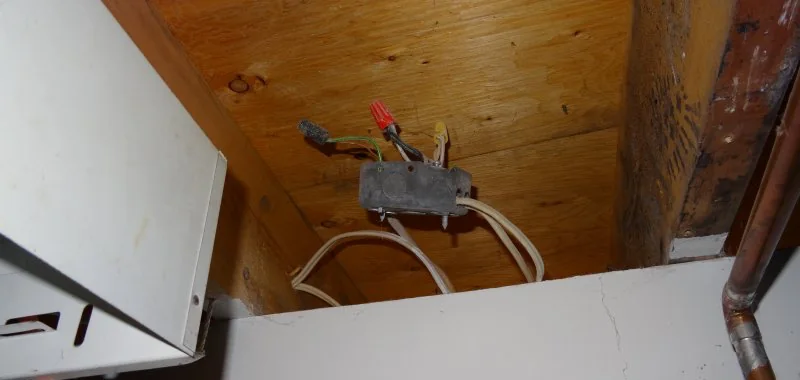
Missing junction boxes associated with wiring concerns have also required attention. A missing box or cover can leave an installation inadequately enclosed or protected. Avoid contact with exposed components and have the installation assessed; do not move wiring or improvise a cover.
A casual viewing cannot establish whether a conductor is energized, whether a connection is sound or how the circuit has been altered. Those are questions for the contractor. A visible defect also leaves open the condition of connections hidden elsewhere along the circuit.
Lighting beside water
Wet-area lighting has raised a different question in our inspections: is the fixture suitable for its location? Its appearance may not supply the answer. A frosted lens, for example, does not verify a product rating.
Have the electrical contractor check the product, installation and applicable requirements. Removing a fixture to find a marking is electrical work, not preparation for a homeowner viewing. The purpose of the observation is to obtain verification without exposing anyone to a hazard.
Arrange assessment without creating another risk
Provide safe access to equipment included in the agreed inspection scope and describe known operational issues or inaccessible areas. Leave panel covers in place. Do not operate suspect equipment or disconnect protective devices to make an appointment more complete. If there is sparking, burning or an immediate electrical danger, keep clear and obtain urgent assistance appropriate to the situation.
After corrective work, request a description of the problem addressed and the verification performed. Knowing that a device was replaced is helpful, but knowing what was checked afterwards makes the record more useful for a buyer or owner.
Representative checks of accessible components do not establish the condition of every outlet or concealed circuit. A residential inspection is not an electrical design or a complete code-compliance determination. The licensed contractor’s assessment should address the identified concerns under the applicable requirements and explain any remaining limits on what was examined.